


Review Us On Google
Call Us Now
312-CHI-CAGO

100% Customer
Satisfaction

Review Us On Google
Chicago skyline

Posts Tagged ‘commercial movers’

Office Remodeling Project

5 Tips to Complete Your Office Renovation Project

5 Tips to Complete Your Office Renovation Project

Office Remodeling Project

An office renovation demands flexibility. The last thing a business owner needs is an interruption to workflow amidst the disruptions already caused by the coronavirus pandemic. The reduced workforce prompted by the health crisis might, however, provide a timely opportunity to renovate an office.

Here are some tips on how to complete the renovation project.

1. Develop a Strategy

Firstly, it is important to devise a renovation strategy. Develop a renovation budget to guide the project from the planning stage through completion. Evaluate the costs of construction, materials, labor and extras. Surprise costs are not uncommon, so budget to accommodate unanticipated expenses.

An office renovation is likely to disrupt workflow. Consider where to put employees, provided staff still work onsite. If the office is nearly empty as a result of the coronavirus pandemic, repositioning existing personnel during the renovation will be less problematic.

When crafting an office renovation design, keep in mind important factors that will affect operations. Evaluate the potential for future growth, advancements in technology, functionality, employee work preferences and the number of office staff. Business owners may consider current office design trends.

A proposed timeline will be extremely beneficial to ensure a smooth renovation. In Chicagoland, the office building may be exposed to harsh winter weather. Certain phases of the renovation may be affected by snow and ice. Factor in delays due to inclement weather to avoid unexpected costs.

2. Communicate

Keep lines of communication open with all the people involved in the office renovation project. These professionals include the design team, general contractor, office staff, landlord and stakeholders. Everyone should be informed about the anticipated work schedule and project plans.

Send out a proposed work schedule to everyone involved, and ensure it is updated whenever changes occur. Involve employees by holding a virtual meeting (due to COVID-19 concerns) and ask them to voice their concerns and design preferences before construction even starts.

3. Maintain ProductivityWoman Standing in Front of Desk in Conference Room with Coworkers

An office renovation can temporarily disrupt employee productivity, even when staff work remotely. Avoid a drop in productivity for office employees who continue to work onsite by communicating often, minimizing construction noise, and ensuring adequate artificial or natural light are available.

The current pandemic has forced many office staff to work from home. An office with minimal employees onsite is ideal for starting and finishing construction work. If staff still work onsite, schedule contractors in the late evening hours when employees are gone.

4. Build Health Safety Features

The COVID-19 pandemic has introduced drastic changes to businesses. As lockdown measures encourage remote workforces, business owners may consider subdividing existing office space. The resulting smaller units make better use of the decreased employee footprint upon which businesses now rely.

Office floorplans must be altered in light of the coronavirus pandemic. Social distancing will continue, and the office must accommodate public health safety measures. Place workstations farther apart, and build cubicle dividers high enough to prevent respiratory droplets from reaching other staff.

If cubicles are too pricey for the budget or do not complement the office layout, install sneeze guards instead. Plastic or glass shields protect employees from respiratory droplets emitted through sneezing and coughing. Sneeze guards may be portable or permanent and are affordable.

Proper ventilation is critical in the coronavirus era, especially in offices with moderate- and high-risk exposure. Clean, fresh air (without re-circulation) is necessary inside offices. During the renovation, increase ventilation in the office via natural or artificial means. Clean air filters regularly, too.

5. Capitalize on Strengths

Most office buildings have strengths. Focus on what features made the building attractive when it was brand-new. The building might have solid structure. If so, consider taking down some walls to allow more natural light into the interior space. Or, open the space to increase the property’s value.

Update the property with finishes and graphics. Consider freshening up the signage, which is a cost-effective measure. The goal is to enhance the building’s curb appeal to create a positive first impression. Keep in mind that younger generation employees seek more daylight and open spacing.

Install environmentally friendly features during the office renovation. When designing or installing new electrical fixtures, plan on using technologies that save energy, such as long-lasting, low-energy light bulbs. Add sensors or time switches to lighting to prevent a waste of energy.

Build out the office using locally sourced recycled, refurbished and sustainable materials. Encourage efficient waste policies by adding centrally located recycling areas. Donate outdated furniture instead of discarding them in the trash. Environmentally friendly companies are more attractive to customers.

Once the office has been successfully renovated, employees who temporarily work remotely will return. Rather than expect them to jump in, introduce staff to the changes. Train employees on the new technologies and the space in which they will work. Provide tours and video training, too.

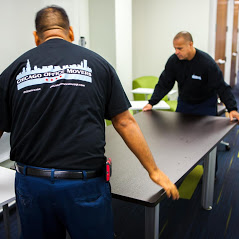
Commercial Moving ServicesMoving Furniture Into Commercial Space

Commercial contractors are considered essential workers during the coronavirus pandemic. Locating a suitable contractor to begin renovations will require an investment of time and resources. When you’ve settled on a reliable contractor, you’ll require the commercial moving services of Chicago Office Movers.

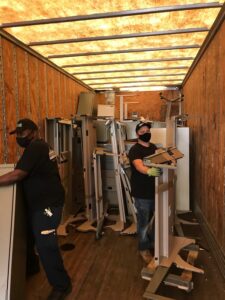
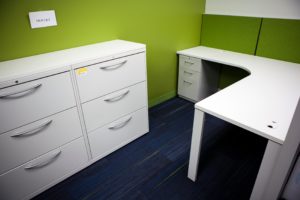
An office renovation requires the physical ability to move all the desks, filing cabinets, chairs and equipment. Chicago Office Movers provides the manpower companies need to clear space for a renovation project. Our commercial movers are also available to disassemble equipment.

Chicago Office Movers are trained to skillfully and carefully pack, label and move office goods to an offsite storage facility or another building. Our office movers load all boxes into our secure moving truck. Our teams also dispose of or donate old office furniture.

Moving crews from Chicago Office Movers will unpack and reassemble any equipment and furniture once the renovation is complete. We also unpack small office supplies, plants and decorations so that your commercial space is usable immediately after the office renovation.

Contact Us

Chicago Office Movers takes every precaution during the turbulent pandemic. We clean and disinfect moving trucks and practice social distancing.

When your Chicago, Illinois, office will be renovated in the near future, consult Chicago Office Movers at 312-244-2246 or through a contact form for expert handling of your office goods. We provide free estimates.

4 Places that Accept Used Furniture in Chicago
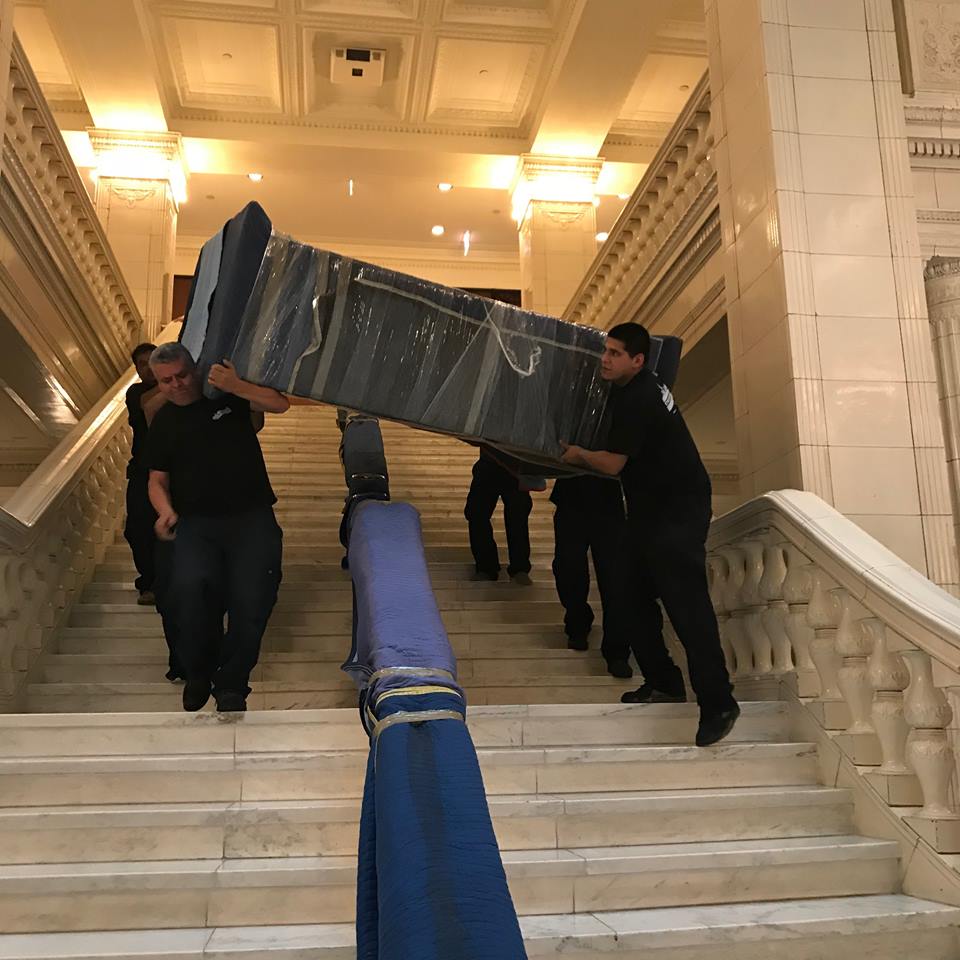
Commercial-Move-Chicago Office Movers

As the COVID-19 pandemic sweeps the nation and leaves offices empty, businesses are restructuring their work from home policies. Some staff may return to work, while others will permanently work from home. What can offices do with idle furniture? Donate used furniture to local organizations.

Company managers may be reassessing their need for office furniture during the coronavirus health crisis. Fewer team members work onsite, making some office goods no longer necessary. Or the staggered shifts will prompt managers to rethink the office floor plans.

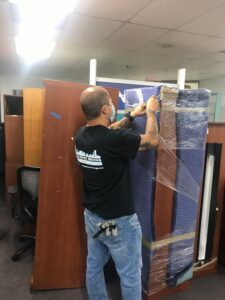
What to do with Surplus FurnitureUnwrapping Furniture Chicago Office Movers
Surplus office furniture may be donated to help non-profits in need. Even large quantities of high-value items may be donated to organizations that sell them and use the profits to offset project costs. Reputable organizations keep used office furniture out of landfills.

Environmental pressures are relieved when office furniture is reused and kept out of landfills. Why throw away office furniture when a small business or family can utilize the goods? Upcycling used office furniture also gives the donation recipients an opportunity to turn them into something new.

Office furniture that is no longer needed as companies restructure their office floor plans in the coronavirus era may be sent to area schools, foundations, charities and social programs. Waste solutions are important to companies that want to demonstrate their corporate social responsibility.

Companies that donate used office furniture may also claim tax deductions when they donate to a qualified charitable organization or non-profit. Donations with a value of over $5000 require the services of an appraiser to provide the proper paperwork needed to claim a tax deduction.

Five steps to complete office furniture donations:

  • Plan the donation process several weeks ahead of the scheduled pickup date, as agencies are extremely busy.
  • Look for local charitable organizations, like the ones that follow.
  • Appraise the furniture.
  • Schedule the pickup.
  • Get a receipt.

Many charitable organizations in Chicago offer free pickup services of the used office furniture. These organizations manage the labor and logistics surrounding the donation. Companies that donate their surplus office goods can rest easy knowing their excess furniture will be in good hands.

1. Chicago Furniture Bank

As the office sits nearly vacant amidst the coronavirus crisis, the break room will remain 100 percent unused. Work life may not return to the status quo once the pandemic ends. Now is a good time to donate the kitchen table and chairs from the lunch and break rooms.

Chicago Furniture Bank accepts kitchen furniture, as well as coffee tables, lamps, mirrors, desks, end tables, couches and chairs. The area non-profit donates its collection of used furniture to families in need. In a span of two years, the organization has kept 750 tons of furniture out of local landfills.

2. Habitat for Humanity’s ReStore Chicago

Habitat for Humanity will take a wide range of used office furniture, as well as cabinets, windows, doors, carpeting, knobs and hinges, countertops and functional appliances. The proceeds from the sales of donated goods go back into the non-profit to help Chicagoans find affordable housing.

All furniture donated to Habitat for Humanity must be in excellent condition. Upholstered furniture should not be ripped, stained or otherwise damaged. In order to schedule a pickup, donating companies are required to submit a photo of the office furniture.

Habitat for Humanity has the right to refuse any donation. The non-profit will not accept donations of furniture items that are known to have a low turnover rate. The organization will also not take donations of goods that are in need of repair.

3. Salvation ArmySalvation Army Storefront

The Salvation Army, a well-known local charity, will take any type of used office furniture, even the television in the office breakroom. Chicagoans in need benefit from the Salvation Army’s charitable services. Donated items also help fund the Salvation Army’s rehabilitation programs.

The Salvation Army does not provide a valuation of donated items. Companies that donate are responsible for determining the approximate value of tax-deductible donations. The non-profit offers a Donation Value Guide to help companies determine the estimated value of some items.

For valuation purposes, for instance, the office desk and upholstered chair have a low value of $26 and a high value of between $104 and $145 each. The office waiting room sofa may be donated and carries a low value of $36 and a high value of $207.

4. Cancer Federation Chicago

The Cancer Federation Chicago accepts furniture of all types. Similar to Habitat for Humanity, the Cancer Federation Chicago will not accept furniture that is in need of repair. The non-profit will also not accept metal desks and used furniture made of particle board or pressed wood.

Private companies and stores benefit from the sale of items by the Federation. The funds from the sales support cancer research as well as education programs for cancer patients and their families. Pickups of donatable furniture may be conveniently scheduled on the organization’s website.

Get Help from a Commercial MoverShipping Equipment During Commercial Move
While local charitable organizations will pick up used office furniture, company managers may need professional help when they have to move office goods in preparation for a renovation. Chicago Office Movers is available to help you move furniture when you have a planned remodeling project.

Chicago Office Movers’ teams of experienced office movers will remove and install furniture, fixtures and large equipment. When you need to move items into storage, our skilled professionals will safely relocate the goods. We also provide a detailed inventory list of items relocated to our secure storage facilities.

Diverse local businesses utilize the invaluable moving services provided by Chicago Office Movers. Our satisfied customers include area businesses in the hospitality industry, government agencies, educational institutions and commercial businesses, among many others. We work with you to understand your business’ unique needs.

Consult Chicago Office Movers when you are planning a relocation within the Windy City, when you have goods to be moved into storage or when a renovation is on the horizon. As a reputable commercial mover, we proudly serve businesses in Chicago, Illinois.

Get a Free Estimate

Give us a call at 312-244-2246 or fill out a contact form to receive a free estimate regarding your next move or furniture donation.

Color Labeling Moving Box

How to Color Code Moving Boxes

Color Labeling Moving Box

Relocating an office is a major event. A lot goes into packing and unpacking the office goods. When you are looking to reduce the stress associated with relocating an office, consider color coding the moving boxes. Here are five practical tips to smoothly transition from office to office.

Before packing up the office, make a conscious decision to donate or sell any unused office equipment or items that will no longer serve a functional purpose in the new space. Moving fewer items will be more organized, less stressful—and preferable.

Importance of Color Coding Boxes

Also prior to the move, business managers should communicate the contents of the boxes to the commercial mover. When surrounded by mountains of plain cardboard boxes, it can be challenging to correctly identify each one. Color coded moving boxes are the solution to this common predicament!

Unpacking is manageable when the movers and office personnel know what box belongs in each room. Each color assigned to an individual moving box should represent a particular zone. The copy room, for instance, should be assigned a certain color, and the breakroom kitchen a different one.

A piece of red tape, for example, may be placed on all the boxes containing storage items. The office supplies may be packed into multiple boxes with purple tape adhered to them. Color coding in such a way helps to quickly identify the contents of the boxes without unpacking them.

Such a tactic is extremely useful since the items that require immediate unpacking can be quickly identified. Knowing what is inside the boxes helps office managers seamlessly continue business operations without experiencing the disruptions caused by the avoidable hassles of unpacking.

1. Gather the right supplies.Business-Woman-Packing-Office

First and foremost, colored duct tape is necessary to color code moving boxes with ease. Large selections of colored duct tape may be found in local retail stores. Choose solid colored duct tape, as opposed to patterned ones, to facilitate quick and easy legibility.

Waterproof permanent markers are needed to write on the colored duct tape. If opting for colored duct tape, choose black permanent markers. The waterproof feature of the markers prevents the ink on the labels from smudging during rainy weather. Offices can always re-use the markers later.

2. Pack the boxes smartly.

In order for the color-coding process to work effectively, the boxes must be packed properly. Smart packing simply means packing similar items together in each box. Office supplies belong in a separate box, while important records should be packed together in a different one.

Mixing up the contents in each box may save on the number of boxes utilized during the move, but it also makes unpacking much more difficult than necessary. Labeling is also easier when the box contains only the items listed on the colored duct tape.

3. Label each box with details.

Each box should be labeled with descriptive information. Noting the contents of the box and what room it goes into is important. Write down the general weight of the box and whether or not it is fragile. Draw arrows to show which way the moving crew should hold the boxes.

4. Place the labels strategically.

The colored duct tape ideally should be adhered to the sides of the boxes. Some moving companies recommend only one side of the box needs to be identified with the tape. However, office personnel might go as far as placing the color-coded tape on multiple sides of each box.

Avoid placing the labels solely on top of the boxes. When the boxes are piled on top of one another in the moving truck, office employees will be unable to see the labels. Adhering the labels on the sides of the boxes allows staff to see them at first glance.

Upon arrival at the destination, the office manager in charge will be better able to direct moving crews as to where to place each box. Depending on the label, some boxes may not require unpacking right away. The color-coded strategy will thus serve its purpose.

5. Create a master list.Man-Writing-on-Clipboard-in-Storage-Warehouse

Creating a master list of the colors assigned to each box is extremely helpful. Keep the master list in a safe place or with the office team member in charge of the move. Be sure the master list can be readily accessed upon arrival at the destination.

Consider using Google Docs or Google Sheets to create the master list. The ease of online programs allows users to access the document anywhere and on any device. Office managers may also want to print out a hard copy (but remember this can get lost during the move).

Another tip is to print several copies of the master list. Hang one master list in a highly visible spot on each floor of the new office space or in each room. Moving crews will reference the list, which facilitates the correct delivery of each box to the appropriate room.

Work with a Professional Mover

Packing up your office can take time away from business operations. Instead, assign the task of packing to an experienced and office mover, like Chicago Office Movers. Our highly efficient packing services are top notch and trusted by many local businesses.

Commercial Move Chicago

When choosing Chicago Office Movers to pack your office goods, you can expect careful handling of your fragile office equipment. Each item is organized, wrapped, and securely packed in sturdy boxes to ensure a smooth transition to your new office space.

Our union movers are trained and background checked, allowing area businesses to place full confidence in our professional packing services. As a part of our comprehensive moving services, we also unpack office goods. Our moving crews will place each box in its correct location at the destination.

Chicago Office Movers has served Chicagoland for the past 35 years. When you need an office relocation company to handle every aspect of your move, count on Chicago Office Movers.

Contact Us

We offer a free estimate for our moving and packing services to businesses in the Windy City. Give us a call at 312-244-2246.

Fans watching football game at stadium

Renovating Event Venues to Accommodate Social Distancing

Fans watching football game at stadium

The novel coronavirus has caused massive societal upheavals, deaths in the hundreds of thousands and illness in over 15 million people worldwide. The public health crisis has an uncertain future. One thing is definite: social distancing helps to curb the spread of COVID-19.

About COVID-19

Remaining at least six feet apart from people in public places has been shown to reduce transmission rates of SARS-CoV-2, the virus that causes COVID-19. Ample distance ensures that potentially infected human respiratory droplets do not reach the respiratory systems of others and cause illness.

Talking, coughing, and sneezing emit respiratory droplets and allow the particles to linger in the air for up to three hours. If the individual is sick with COVID-19, the infectious particles can invade the respiratory system of a person in close proximity and lead to mild or severe infection.

As a result, social distancing has become the norm, at least for now. Until a cure or effective treatment for COVID-19 is developed, social distancing mandates will continue throughout societies nationwide and worldwide. Social distancing will have a profound effect on public and private events.

How Event Venues Accommodate Social Distancing

Maintaining social distance is not an easy task. Event attendees are accustomed to packed stadiums and concert halls. These venues are undergoing drastic changes. Weddings and private ceremonies held in community centers, churches, or banquet halls, will also be different during the COVID-19 era.

Sports ArenasUnited Center Blackhawks

Sports arenas will no longer be filled to maximum capacity. Stadiums limit capacity to 17 to 20 percent of what the arena is built to hold. Dire reductions in capacity will have an adverse effect on stadium revenue since incoming funds offset the costs of operational debt and retaining employees.

If the COVID-19 pandemic exceeds a year, sports teams will be forced to consider making permanent changes to fan seating. Long-lasting adjustments can affect capital investments. A fixed solution, such as removing seats, however, would allow for adequate social distancing.

A short-term approach would be to temporarily take out the seats. Modifying arenas using this tactic is cost-efficient and practical. Loge box seating, which is where four seats are separated from surrounding ones by six feet, would follow social distancing rules.

In addition to changing seating arrangements to accommodate social distancing, sports arenas are implementing cashless payments and online concessions ordering. Hygiene practices are receiving an overhaul, as arenas install touchless doors and automated technology to prevent person-to-person contact between fans and staff.

Movie Theaters

Movie theaters are responding to the coronavirus outbreak by showing movies on the same night and on multiple screens. Capacities are limited inside movie theaters to ensure moviegoers maintain proper social distancing. The safety of customers and staff is the number one priority.

AMC, Regal and Cinemark, which are among the nation’s largest theater chains, have closed in response to governmental advice and the coronavirus pandemic. But movies have been around for decades, and the current health crisis will not stop people from enjoying shows on the silver screen.

The resurgence of drive-in theaters demonstrates just how resilient moviegoers are. Drive-in theaters give film buffs the opportunity to be entertained while remaining more than six feet apart and avoiding the slightest possibility of microbial transmission. Bargain ticket prices make drive-in theaters even more enjoyable.

People who have never visited a drive-in are flocking to the outdoor movies. Drive-in moviegoers wear masks and queue up at proper distances at the snack bars. Drive-in theaters are one surefire way to escape being stuck at home and give businesses a chance to turn a profit.

Music VenuesSydney Opera House Theater

Music venues are resorting to guidelines established by the Centers for Disease Control (CDC) to review operational plans. In venues that can hold a maximum capacity of 300, only 75 people are allowed inside for the duration of the coronavirus pandemic.

Bands that play to huge crowds may now open to groups of no more than 50. Virtual entertainment is taking center stage for the time being, as the coronavirus makes safe social gatherings impossible. Virtual events include live streaming of local concerts and even the much-needed comedic shows.

While the majority of event venues are closed due to the COVID-19 health crisis, some are taking advantage of the situation. Renovations are being done behind closed doors. Repainting, replacing chairs, adding drop ceilings, and replacing lighting are efforts to help improve event venues.

The coronavirus pandemic will not last forever, and entertainment venues are looking forward to the day when they can welcome back sports fans, movie buffs, concert attendees and theater goers. Those renovating hope to make their space more welcoming and user-friendly for patrons upon their return.

Help with RenovationsChicago-Office-Movers-Wrigley-Field

If you are among business owners who choose to renovate while your event venue is closed to the public, look to Chicago Office Movers. As an office mover, we provide a range of comprehensive services to assist with all aspects of office renovation and remodeling.

Crews from Chicago Office Movers are available to temporarily move large furniture around through our decommissioning services while your renovations are underway. Our team members are capable of lifting heavy goods with the help of advanced moving equipment. We also move furniture of all sizes.

Business owners place full trust in the professional moving crews at Chicago Office Movers, since each member of our team is background checked, licensed, and experienced. We are also union movers. When you need a hand before or during your renovation, Chicago Office Movers is ready to help.

Most importantly, Chicago Office Movers is careful to practice safety measures to protect our clients and team during the coronavirus outbreak. We clean and disinfect moving trucks daily, our moving crews practice social distancing to avoid contact, and restrict sick personnel from working.

Get a Free Estimate

Choose Chicago Office Movers when you are ready to renovate or remodel. You can expect competitive pricing, efficient service, and safe practices. As a commercial mover, we also provide reliable commercial relocation services.

Call our friendly representatives at 312-244-2246 for a free estimate.

Contact Us

  • This field is for validation purposes and should be left unchanged.
  • MM slash DD slash YYYY

The Future of Business Travel After the Pandemic

Business Lady In Front of Airport Screens

The coronavirus pandemic has hit the airline industry doubly hard. Approximately two million passengers had passed through the Transportation Security Administration’s (TSA) checkpoint on March 30, 2019. On the exact day this past March, a meager 154,000 air travelers did the same.

Business people travel for either work or other professional reasons. But since the coronavirus pandemic peaked in the first quarter of 2020, airports had seemingly turned into ghost towns. Rather than concourses filled with people, just one or two individuals were present.

How the Pandemic Affected the Airline Industry

Adding further tension to the already worrying situation caused by the coronavirus pandemic were the increased stress levels of flight attendants, customer service personnel, and pilots. Shops in airports were also closed, leaving only the solitary coffee stands to provide air travelers with a jolt of caffeine.

As the worst of the pandemic seems to be over or at least somewhat under control, more business people are choosing to fly now than during the height of the pandemic. This past May, 14 percent of consumers say they will board a plane once flight restrictions are lifted.

Changes within Airports

While airline executives believe it could take years for air travelers to resume flying as frequently as they had done in prior years, planes are still taking off—albeit with significant changes. Basic adjustments are being made, but major changes will take some business passengers by surprise.

The changes to business travel are likely to be permanent. These alterations will be apparent as soon as the air travelers arrive at the airport. Large international hubs will see drastic changes. All these efforts are intended to help passengers feel and remain safe from COVID-19.

1. Changes to Flight Experiences

Measures to reduce contact between airplane passengers, crew members and airport employees are being enforced. While social distancing is a key factor in preventing the spread of COVID-19, doing so on a 186-seat Boeing 737 airplane is difficult. However, airlines are exploring new seating arrangements.

For instance, airlines might reduce cabin capacity by leaving the middle seat empty. Future design enhancements to seating could include facing the middle seat backwards or adding a plastic shield around seats. But such retrofitting is expensive and could affect ticket prices.

Occasionally, packed planes will fly, angering passengers. New airline policies are in place, where passengers are notified if their flight will be over 70 percent full. But most major airlines limit the passenger capacity to 60 percent, and more flights are being added to meet demand.

2. Modifications at Airports

Business-People-Walking-in-Glass-Building

At the airport, the TSA will limit contact between air travelers and airline personnel by having the former scan their own boarding passes, whether paper or electronic. Efforts to reduce touch points while screening also include passengers placing phones, keys, and wallets into carry-on bags.

Food items are known to set off the alarm in the x-ray scanner. To prevent TSA officers from removing and handling the food, officers now request that all food items be placed in clear, plastic bags. Passengers should remove the bags of food from carry-on luggage.

When checking in, business travelers can expect to see sneeze guards at the counters. TSA officers will be wearing face masks, and passengers are encouraged to do the same. More touchless kiosks will be added to US airports to allow passengers to print bag tags with a smartphone.

3. Implementation of Health Screenings

Health screenings at the airport will be commonplace. Airline personnel are exploring thermal scanning and temperature checks at airports. While the risk of exposure to the coronavirus is not fully avoided, airlines can request that travelers with elevated temperatures reschedule.

Airlines will prevent travelers with temperatures of 100.4 degrees or higher from flying. Temperature checks are done safely using touchless thermometers prior to passengers boarding. Temperature screenings are imperfect, given that a small percentage of hospitalized COVID-19 patients have fevers.

Passengers boarding major airlines will be required to complete a checklist prior to entering the aircraft. The checklist displays COVID -19 symptoms, and the traveler must declare to not have experienced any symptoms or been in close contact with an infected person within the last 14 days.

With the addition of health screenings, business passengers can expect longer lines. The coronavirus may be sniffed out by dogs in the foreseeable future. The rationale is to train bomb-sniffing dogs to detect the coronavirus. Research on these capabilities is currently underway in labs.

4. Assessments of Business Flights

Virus-Downward-Graph

Not every part of the world is equally affected by COVID-19, making air travel to some regions safer than others. However, the situation can change rapidly, as researchers uncover more details about the novel coronavirus. Business travelers are urged to assess all business trips for risks.

If a business trip has multiple risks, consider canceling the flight. Business professionals should also consider national and international guidelines prior to booking their trips. Those evaluating whether or not to fly should give significant weight to their comfort levels in the aftermath of the pandemic.

Also consider business travel insurance in the event flights are canceled due to the coronavirus. Certain companies offer specialized travel insurance to businesses, given the fact that business trips occur more frequently and are thereby subject to cancellations more often than leisure travel.

Need Help with Moving Your Business?Chicago Office Movers Truck Highway

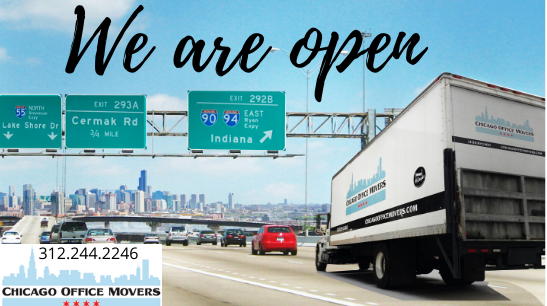
Company executives may have plans to scout a new business location, necessitating business travel. When it’s in your company’s best interests to relocate, consult a premier office relocation service, like Chicago Office Movers. We are open and ready to relocate your company in the safest ways.

Chicago Office Movers takes care during the coronavirus pandemic to disinfect moving trucks, practice social distancing and take employee temperature checks prior to each shift. Our moving crews are trained, licensed and background checked to ensure a secure commercial move.

Free Estimate

Consult the Windy City’s most reputable commercial mover, Chicago Office Movers. We provide quality corporate relocation services, whether you are moving internationally or interstate.

Call our friendly representatives at 312-244-2246 for a free moving estimate when you are preparing for an upcoming relocation.

Contact Us

  • This field is for validation purposes and should be left unchanged.
  • MM slash DD slash YYYY
Call us (312) 244-2246