



Best Day of the Week to Move an Office (Complete Planning Guide)
When it comes to moving an office, the day you choose can make a bigger difference than you might think. Pick the wrong day, and you risk disrupting employee productivity, increasing moving costs, and creating unnecessary chaos. Choose wisely, and your move can be efficient, cost-effective, and virtually seamless.
Quick Answer: What Is the Best Day to Move an Office?
The best day to move an office is typically Tuesday or Wednesday. These midweek days balance productivity, mover availability, and cost efficiency while minimizing disruption to your team and operations.
In this guide, we’ll break down the best day of the week to relocate your office, key factors to consider, and actionable tips to minimize downtime and keep your business running smoothly.
Why Choosing the Right Day Matters
The day you schedule your office move can have a significant impact on more than just logistics, it affects your team’s productivity, your budget, and the overall efficiency of the move. Here’s why it matters:
Employee Productivity & Workflow Disruption
Moving an office inevitably causes some downtime, but choosing the right day can minimize the impact. Midweek moves, for example, may interrupt crucial projects or client meetings, while end-of-week moves might allow staff to settle in over the weekend before business picks up again. Strategically timing your move helps keep your team focused and reduces lost productivity.
Cost Differences Between Weekdays and Weekends
Moving companies often charge different rates depending on the day. Weekdays can be busier and therefore more expensive, while weekend moves may offer cost savings but require careful planning to ensure all staff and services are available. Understanding these cost differences can help you balance your budget with your operational needs.
Moving Company Availability and Scheduling Constraints
The best movers are in high demand. Scheduling your move on a less busy day increases the chances of securing your preferred team and equipment. Early planning also allows flexibility if unexpected changes arise.
Traffic, Parking, and Building Access Considerations
Large office moves often involve trucks, equipment, and multiple staff. Choosing a day with lighter traffic, ample parking, and easier access to your building can save hours and reduce stress for everyone involved.
By carefully considering these factors, you can pick a moving day that keeps costs manageable, minimizes disruption, and ensures your move goes as smoothly as possible.
| Day | Best For | Advantages | Risks |
|---|---|---|---|
| Monday | Fresh start | Clean slate for the week | High disruption, busy workload |
| Tuesday | Balanced moves | Less backlog, smoother transition | Moderate coordination needed |
| Wednesday | Most efficient | Best availability, minimal disruption | Less buffer if delays occur |
| Thursday | Pre-weekend prep | Time to prepare beforehand | Delays spill into Friday |
| Friday | Weekend setup | Extra time after move | High downtime risk |
| Weekend | Zero weekday disruption | No impact on operations | Higher costs, limited access |
Day-by-Day Breakdown: Finding the Best Day to Move Your Office
Choosing the right day for your office move isn’t just about convenience, it’s about balancing productivity, costs, and logistics. Here’s a closer look at the pros and cons of each day:
Monday – Fresh Start vs. High Workload
- Pros: Starting the week with a move can feel like a fresh start, giving your team a clean slate in a new space.
- Cons: Mondays are often the busiest day for most offices, with catch-up tasks and early-week meetings. A move can significantly disrupt workflow and make it harder to stay on top of pressing projects.
Tuesday – Minimal Disruption
- Pros: Tuesday strikes a balance, most of the Monday backlog has been handled, and the week is still early enough to adjust. Moving on this day can minimize disruption and allow for a smoother transition.
- Cons: Some departments may still be catching up from Monday, so careful scheduling is essential to avoid conflicts.
Wednesday – Often the Best Day Overall
- Pros: Midweek moves tend to work well because the week is in full swing, allowing for efficient coordination without the pressures of Monday or Friday deadlines. Many moving companies also have more availability midweek.
- Cons: If unforeseen delays occur, there’s less time to catch up before the week ends, so contingency planning is important.
Thursday – Risk of Spillover into End-of-Week Tasks
- Pros: Moving on Thursday allows teams to spend most of the week wrapping up tasks and preparing for the transition.
- Cons: Any delays can spill over into Friday, potentially impacting end-of-week deadlines and leaving employees working in a partially set-up office.
Friday – High Risk for Downtime & Incomplete Setup
- Pros: Some may view Friday as convenient because it precedes the weekend, giving staff time to settle in afterward.
- Cons: Friday moves carry a high risk of downtime, with limited time to resolve setup issues. Unfinished installations or tech setup can leave employees unproductive until the following week.
Weekend Moves – Higher Costs but Sometimes Necessary
- Pros: Moving over the weekend minimizes disruption to weekday operations and can be ideal for offices with critical client-facing functions.
- Cons: Weekend moves often come with higher labor costs, limited staffing, and restricted access to building services or elevators. Careful planning is required to ensure everything is ready by Monday.
Understanding the advantages and drawbacks of each day helps you make an informed decision that balances efficiency, cost, and employee productivity.
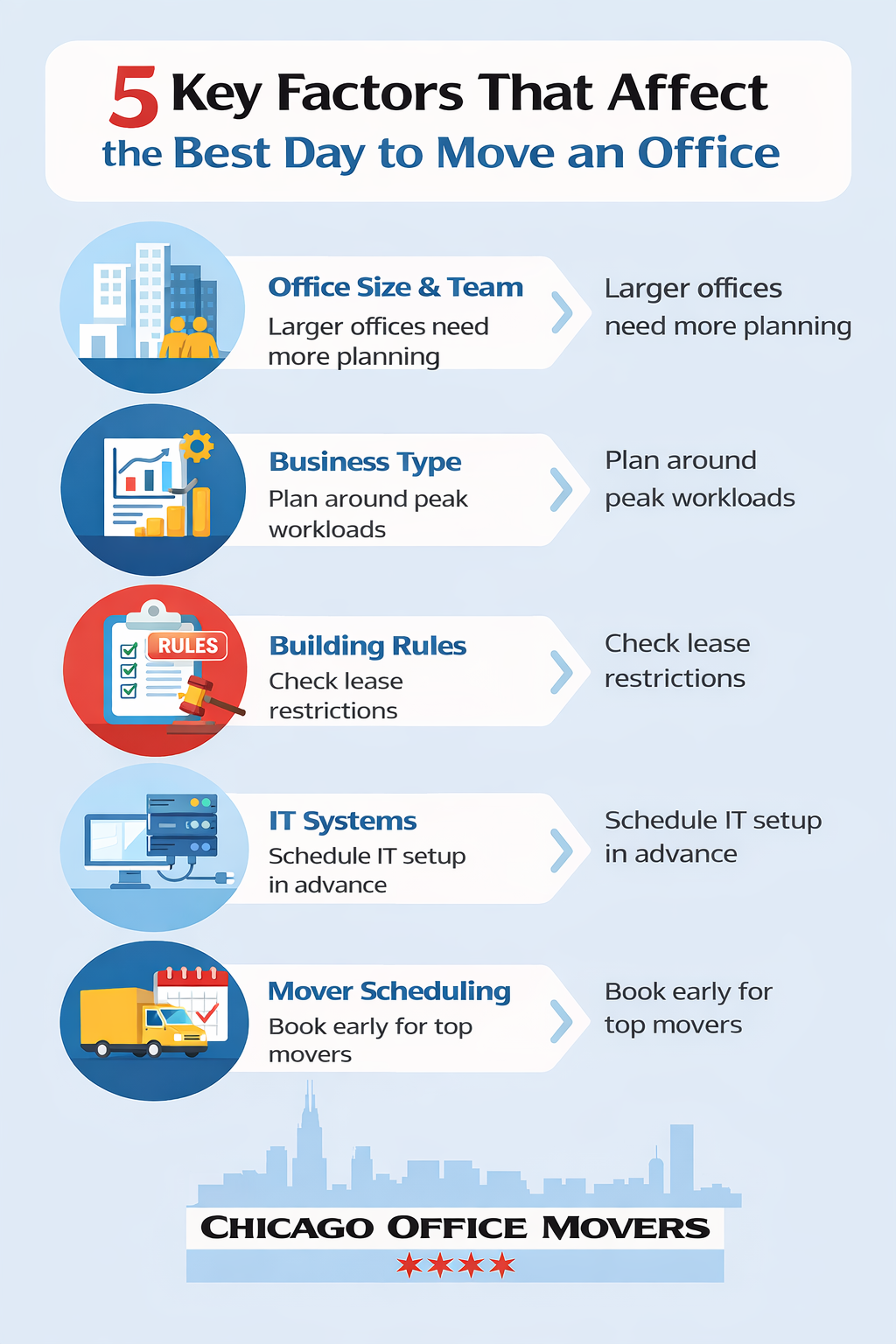
5 Key Factors That Affect the Best Day to Move
While a general day-of-the-week guide is helpful, the “perfect” moving day ultimately depends on several office-specific factors. Understanding these variables can help you tailor your move for maximum efficiency and minimal disruption.
- Office Size & Number of Employees: Larger offices with more staff require more coordination, meaning midweek moves or weekend options might be preferable to avoid bottlenecks. Smaller teams may have more flexibility and can adjust more easily to weekday moves.
- Type of Business / Industry: Different industries have different peak workloads. For example, tech companies may experience less client disruption during midweek moves, while retail or customer-facing services may need to schedule moves during off-hours or weekends to avoid affecting operations.
- Lease Agreements & Building Rules: Some commercial leases include restrictions on moving days, hours, or elevator usage. Understanding your building’s regulations early ensures you avoid fines, access issues, or last-minute delays. If you are relocating locally, review permits needed to relocate a business in Chicago to avoid delays.
- IT Infrastructure & Server Relocation Needs: Offices with complex IT systems or servers must account for setup and downtime. Choosing a day when IT staff or external technicians are available is critical, and often a weekend or late-week move works best to minimize operational impact.
- Moving Company Schedules & Availability: Top-tier moving companies book quickly, particularly during peak seasons. The best day for your office move may be dictated by when your preferred movers are available, so early scheduling and flexibility can save both time and stress.
By considering these factors, you can select a moving day that aligns with your office’s unique needs, keeping the transition as smooth as possible while minimizing disruption to your team and operations.
How to Decide the Best Day for Your Office
Once you’ve weighed the pros and cons of each day and considered the factors unique to your office, it’s time to make a concrete plan. Following a structured approach can help ensure a smooth, efficient move with minimal disruption. Here’s a step-by-step checklist:
- Identify Critical Departments
Determine which teams or departments are essential to keeping operations running. Schedule their move at a time that minimizes workflow interruptions and ensures key projects continue without major setbacks. - Confirm Mover Availability
Reach out to your preferred moving company early to secure the best day. Availability may influence your choice, especially if you require a larger crew, specialized equipment, or weekend access. - Coordinate IT & Telecom Setup
For offices with complex technology, coordinate with IT staff or service providers to ensure servers, phones, and networks are disconnected, transported, and reconnected efficiently. Consider scheduling the move around off-hours or weekends if downtime needs to be minimized. - Communicate with Employees
Keep your team informed about the moving schedule, expectations, and any temporary workflow changes. Clear communication reduces confusion, prevents mistakes, and keeps everyone on the same page. - Plan for Contingency Delays
Even the best-laid plans can hit snags, traffic delays, elevator access issues, or last-minute IT complications can occur. Build in buffer time and prepare backup plans to keep the move on track.
If you are working on a tight timeline, this guide on how to plan a last-minute office move in Chicago can help you stay organized.
5 Tips to Make Any Day Work
Even after choosing the ideal day, there’s always a chance that scheduling constraints, building rules, or other factors will force you to move on a less-than-perfect day. With careful planning, however, you can make any day work. Here are some practical tips:
- Pack and Label Early
Start packing non-essential items well in advance, and clearly label boxes by department, employee, or function. Early organization makes unpacking faster and reduces confusion on moving day. - Hire Experienced Commercial Movers
Professional movers who specialize in office relocations can handle large equipment, delicate electronics, and heavy furniture safely and efficiently. Their expertise helps minimize downtime, regardless of the day you move. - Schedule IT Disconnect/Reconnect in Advance
Coordinate with your IT team or service providers to schedule technology disconnections, relocations, and reconnections ahead of time. This ensures your servers, phones, and network are up and running as quickly as possible after the move. - Communicate Clearly with Staff
Keep employees informed about timelines, responsibilities, and any temporary workflow changes. Clear communication helps your team stay organized and reduces stress during the transition. - Prepare a Backup Plan for Unexpected Issues
Even the most carefully planned move can encounter hiccups such as traffic delays, elevator access issues, or last-minute tech problems. Have a contingency plan in place to keep the move on track and maintain business continuity.
Choosing the Best Day and Making Your Move Stress-Free
While midweek is often the sweet spot for office moves, the truth is that the “best” day depends on your team, your workflow, and your office’s unique needs. By considering factors like employee schedules, IT requirements, building rules, and mover availability, you can select a day that minimizes disruption and keeps your operations running smoothly.
No matter which day you choose, preparation is key. Packing early, hiring experienced movers, coordinating technology, and communicating clearly with staff will help ensure a seamless transition.
Planning an Office Move in Chicago?
If you’re planning an office move in the Chicago area, partner with professionals who understand the complexities of commercial relocations. Chicago Office Movers offers expert commercial moving services designed to handle every detail, from heavy equipment and IT infrastructure to furniture setup, so your team can get back to work quickly.
Contact Chicago Office Movers to plan your office move today and let us make the process smooth, efficient, and stress-free.

Director of Marketing & Development
Office: (847) 621-5176
Cell: (312) 497-3203
At Chicago Office Movers, Kari-Ann is our Director of Marketing & Development. As the master of visibility, she is responsible for all things Branding and Marketing related. Kari-Ann comes to us with experiences in Marketing for a multi-brand and multi-location company, the service industry, non profit marketing event planning and fundraising, and retail management. She is the Chair of the Board for the Schaumburg Business Association 2021 & 2022, a member of the Elk Grove Village Chamber Board of Directors, and past chair and top fundraiser for the Northwest Suburban Walk To End Alzheimer’s.
Kari-Ann received her Bachelor of Business Administration in Marketing from Western Michigan University. She is Master Certified in Constant Contact Email Marketing and has held numerous social media training classes.
Tags: best day to move office, office moving tips