


MRI Machine Relocation Cost: Average Prices, Key Factors & What to Expect in 2026
MRI Machine Relocation Cost: Average Prices, Key Factors & What to Expect in 2026
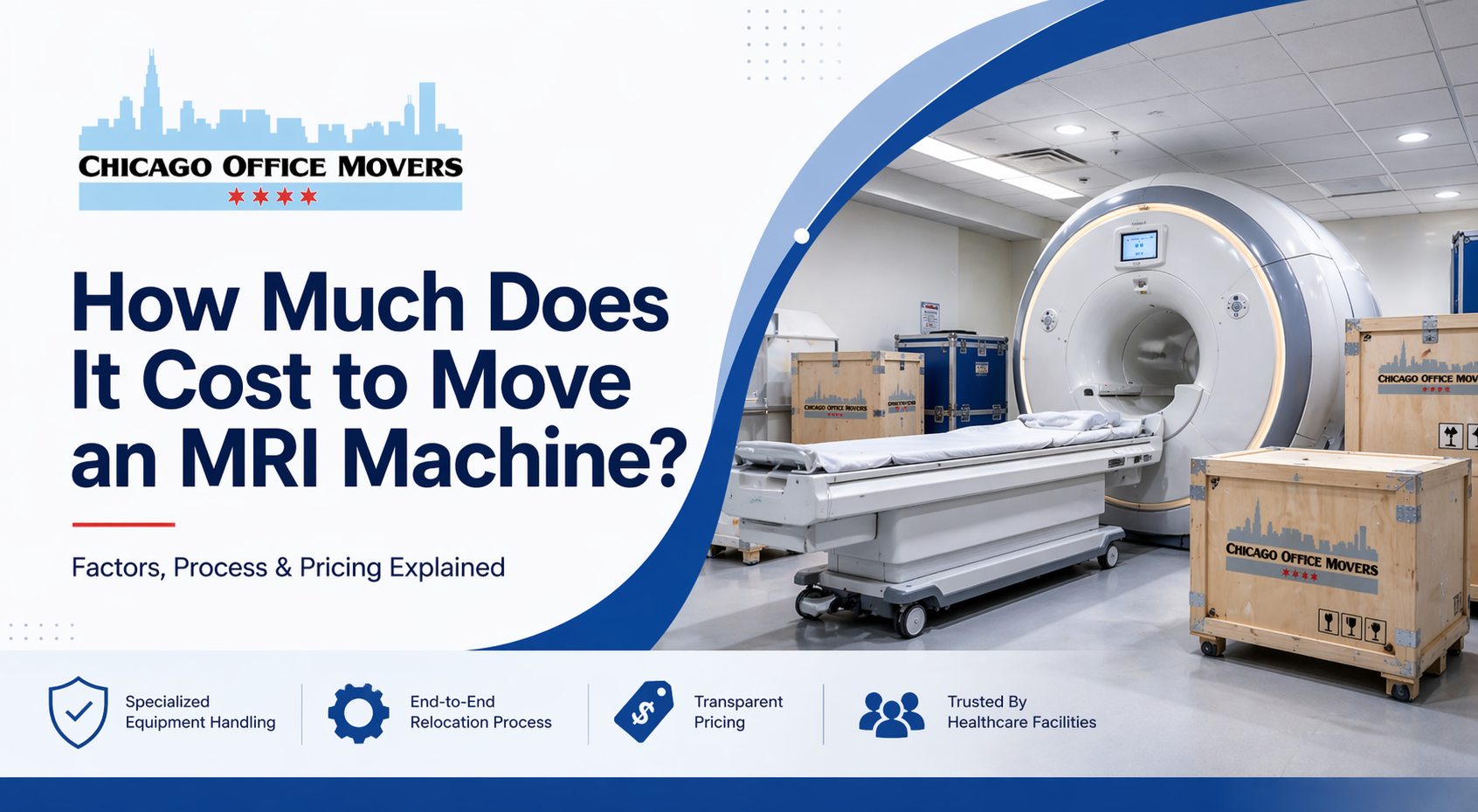
Moving an MRI machine costs between $60,000 and $100,000 on average, though highly complex relocations can exceed this range significantly. This guide covers every factor that affects the price, walks through the full relocation process step by step, and explains what hospital administrators, imaging center directors, and facilities managers need to know before scheduling an MRI move.
Whether your facility is upgrading to newer imaging technology, relocating to a new building, or decommissioning aging equipment, understanding the cost and process upfront helps you plan your budget, timeline, and vendor selection with confidence.
What Is an MRI Machine and Why Is Moving One So Complex?
MRI (magnetic resonance imaging) machines are among the most sophisticated and expensive pieces of medical equipment in operation today. They are used across a wide range of healthcare settings including acute care hospitals, orthopedic clinics, outpatient imaging centers, breast imaging centers, and academic research institutions engaged in neuroimaging and translational research.
Because MRI machines can weigh up to 80,000 pounds, contain powerful superconducting magnets, and house fragile electronic components, relocating them is a specialized discipline that demands licensed rigging professionals, custom transport vehicles, and meticulous planning. A standard commercial mover cannot perform an MRI relocation safely or legally.
MRI equipment is typically replaced every 10 years due to end-of-life wear, increasing breakdown frequency, evolving regulatory standards, or the desire for higher resolution imaging. When new equipment arrives, the old machine must be decommissioned and removed. Pre-owned MRI systems may also be resold and transferred to another facility, or moved to a different wing within the same building, both of which require the same professional relocation standards.
How Much Does It Cost to Move an MRI Machine?
The average cost to move an MRI machine ranges from $60,000 to $100,000. Complex relocations involving structural modifications, long-distance transport, high-field-strength magnets, or new-build destination sites regularly exceed this range.
The following factors have the greatest influence on total cost.
- Distance of the move. A local intra-facility move within the same building costs less than a cross-town move, which in turn costs less than an interstate relocation. Long-distance transport may require special hauling permits, escort vehicles, and overnight accommodations for the moving crew, all of which add to the total.
- Machine weight and magnet field strength. A 1.5 Tesla (T) cylindrical superconducting scanner weighs up to 10,000 pounds, while a 3.0 T scanner can weigh up to 17,000 pounds. High-field-strength magnets require specialized transport trucks and additional rigging equipment. The full MRI system including the magnet bore, gradient coils, electronic cabinet, patient table, and RF cage can collectively weigh far more.
- Building and structural modifications. Facilities with standard-width corridors and doorways often require wall removal, roof opening, or crane access to extract or install the MRI system. Each structural modification adds contractor time, permit fees, and restoration costs. Complicated building layouts extend the relocation timeline from 3 to 5 days to longer, which drives up labor costs.
- Site preparation at the destination. When the receiving facility has never housed an MRI system before, the room must be prepared with RF shielding, cryogen exhaust venting, special flooring, dedicated electrical feeds, and cooling systems before the machine can be installed. This preparation work adds significant time and cost compared to moving into an already-equipped MRI suite.
- Number of peripheral components and accessories. Additional MRI accessories such as patient monitoring equipment, specialized coils, workstations, and cooling units each require separate disassembly, custom crating, and reassembly. More components mean more labor hours and more opportunities for damage if not handled correctly.
- Insurance coverage. Because a new MRI machine can cost between $1 million and $3 million, insuring the equipment during transport is essential. A moving company's standard cargo coverage is rarely sufficient for medical imaging equipment of this value. Purchasing dedicated equipment insurance adds to the project cost but is a prudent financial decision.
- Permits and regulatory compliance. Local jurisdictions may require special hauling permits for oversized loads, crane operation permits, and building modification permits. These fees vary by municipality and can add several thousand dollars to the total project cost.
- Timing and seasonal factors. In cities like Chicago, moving an MRI machine during winter requires advanced logistics planning to account for icy roads, extreme temperatures, and potential weather delays. Scheduling delays add labor costs and may require temporary equipment storage.
The MRI Machine Relocation Process: Step by Step
A professional MRI relocation follows a strict sequence designed to protect both the equipment and the people involved in the move. Here is what the process looks like from start to finish.
Step 1: Pre-Move Assessment and Structural Planning
The relocation begins weeks before the physical move. Professional movers conduct an on-site assessment of the current facility, documenting the building layout, corridor widths, elevator capacities, loading dock access, and any obstacles along the exit path. A parallel assessment is conducted at the destination facility.
Based on these assessments, the moving team determines whether walls need to be removed, whether the roof needs to be opened, or whether a crane will be required. Structural modifications are planned and permitted in advance. The exit and entry paths are mapped in detail, and a timeline with milestones is established. This planning phase is what separates qualified MRI movers from general heavy equipment movers.
Step 2: Disassembly by Certified Technicians
Once the move date arrives, certified MRI technicians begin systematic disassembly of the machine. Fragile electronic components are removed first and packed individually in anti-static, padded crating materials. The magnetic shroud and patient table are detached using specialized tools that prevent damage to the magnet assembly and bore surfaces.
All cables, ventilation hoses, cryogen lines, and data connections are carefully labeled, photographed, and stored to ensure accurate reassembly. Strict protocols govern every step to preserve the structural and functional integrity of the machine.
Step 3: Transport of the MRI Components
After disassembly, the heavy components are loaded and transported. The superconducting magnet, which represents the most sensitive and valuable part of the system, is transported in a specialized vehicle engineered to protect it from vibration, shock, and temperature extremes. Smaller components are placed in custom crates sized to each part.
For high-field magnets such as 3.0 T systems, transport trucks must meet specific load ratings and vibration dampening standards. Long-distance moves require route planning to avoid low-clearance bridges, weight-restricted roads, and areas where the vehicle's footprint would exceed local regulations.
Step 4: Reinstallation and Recalibration
At the destination, the process reverses. Each component is repositioned in the correct sequence, electrical and data cables are reconnected according to the labeled documentation from disassembly, and the machine undergoes a full system check. Superconducting magnets typically require a ramp-up period and may need re-shimming and gradient calibration before the machine is clinically operational.
When the receiving facility is a new build or has never hosted an MRI system, reinstallation extends significantly. The RF-shielded room must be validated, the cryogen vent system tested, and electrical feeds verified before the machine is powered up. This extended timeline adds labor hours and increases overall project cost.
MRI Relocation Timeline: What to Expect
A straightforward intra-facility MRI move within a prepared room typically takes 3 to 5 days from physical move start to system operational. A more complex relocation involving structural modifications, long-distance transport, and site preparation at a new facility can take 2 to 4 weeks when pre-move planning and post-move calibration are included.
Downtime for your imaging department should be factored into your planning. Facilities that rely heavily on MRI revenue may want to schedule the relocation during lower-volume periods or arrange temporary imaging access at a nearby partner facility.
Types of Facilities That Need MRI Relocation Services
Several types of organizations regularly require professional MRI moving services.
- Acute care hospitals utilize MRI machines during inpatient care and emergency diagnostics. These facilities often have complex building layouts and operate 24 hours a day, making move scheduling and access coordination particularly important.
- Orthopedic and specialty clinics rely on MRI imaging to evaluate joints, spinal conditions, and soft tissue injuries. These smaller facilities may have tighter corridor constraints than large hospital campuses.
- Outpatient imaging centers provide scheduled diagnostic scans and often upgrade their MRI equipment on a regular cycle to attract referrals from physicians seeking the latest imaging capabilities.
- Breast imaging and oncology centers use MRI as a primary screening and staging tool and require the same level of precision relocation as any other clinical setting. If your practice is also planning a broader facility move alongside your equipment relocation, our guide on relocating a medical practice in Chicago covers the full process in detail.
- Academic medical centers and research institutions use high-field MRI systems, sometimes including 7.0 T research-grade magnets, for neuroimaging, translational research, and clinical trials. These systems are often the most expensive and most technically demanding to move.
How to Choose an MRI Moving Company
Not every heavy equipment mover has the qualifications to handle an MRI system. When evaluating vendors, look for the following.
- Verify that the company has specific, documented experience moving MRI systems, not just general medical equipment. Ask for references from hospitals or imaging centers where they have completed MRI relocations.
- Confirm that their technicians are trained in MRI disassembly and reassembly and that they follow OSHA safety standards throughout the move.
- Ask about their transport vehicles and whether they own specialized MRI transport trucks or subcontract this portion to a third party.
- Review their insurance coverage and confirm that it is adequate for the replacement value of your specific MRI system. Do not assume that standard cargo coverage applies.
- Request an itemized written estimate that separates labor, transport, structural modifications, permits, and any site preparation costs so you can compare vendors accurately.
MRI Moving Services in Chicago and the Chicagoland Area
Chicago Office Movers is a licensed commercial moving company with decades of experience serving hospitals, imaging centers, universities, and businesses throughout the Chicago metropolitan area and Chicagoland region. Our crews are trained in the relocation of heavy medical equipment including MRI systems, CT scanners, and other high-value imaging technology.
We follow OSHA safety standards on every project and are equipped with the tools, vehicles, and technical expertise to manage MRI moves from initial planning through final recalibration. Our machinery moving services include complete disassembly, custom crating, specialized transport, structural coordination, reinstallation, and system verification.
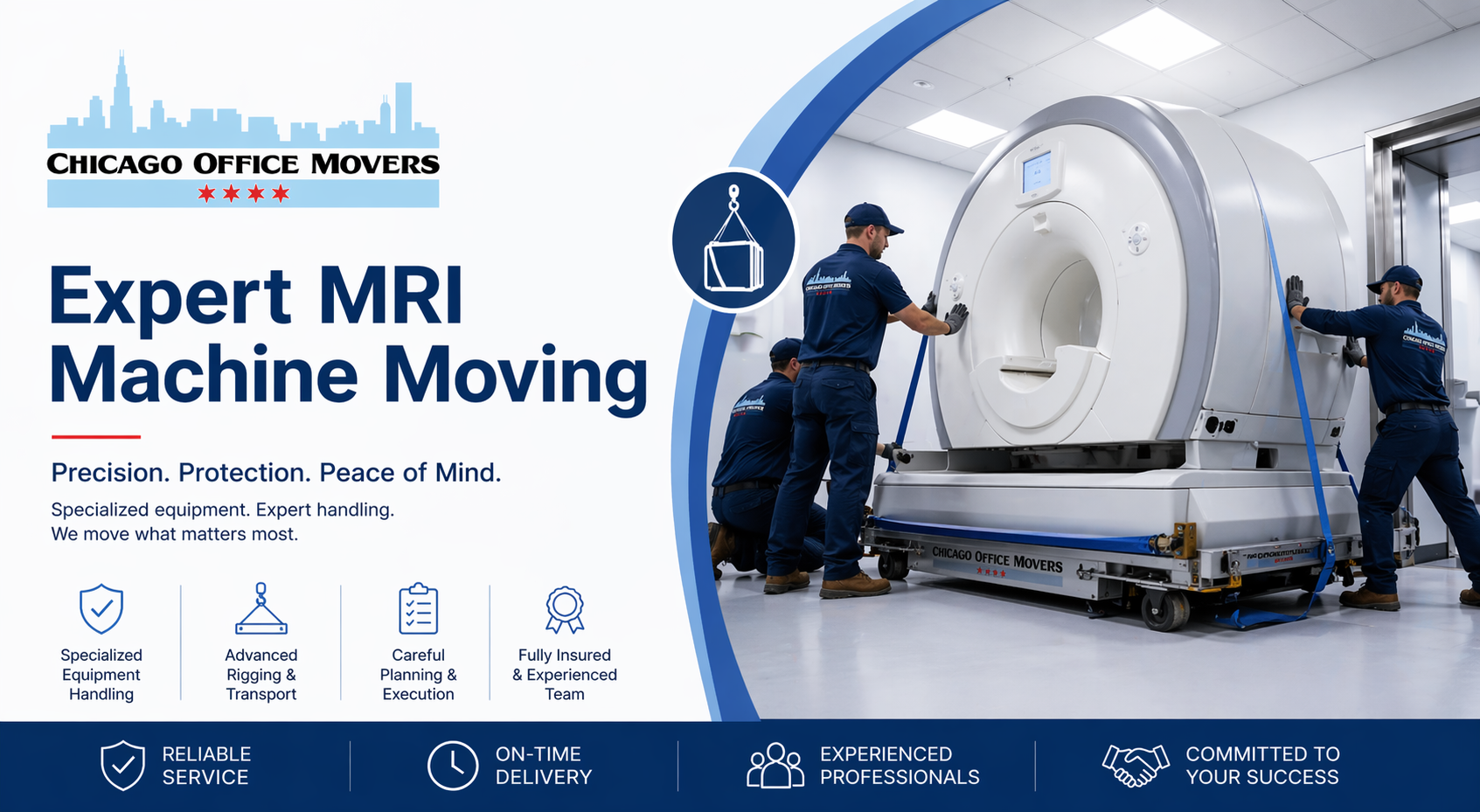
If your facility is planning an MRI relocation in Chicago, Elk Grove Village, or anywhere in the surrounding region, contact Chicago Office Movers today to request a free, detailed estimate tailored to your specific equipment and facility.

Director of Marketing & Development
Office: (847) 621-5176
Cell: (312) 497-3203
At Chicago Office Movers, Kari-Ann is our Director of Marketing & Development. As the master of visibility, she is responsible for all things Branding and Marketing related. Kari-Ann comes to us with experiences in Marketing for a multi-brand and multi-location company, the service industry, non profit marketing event planning and fundraising, and retail management. She is the Chair of the Board for the Schaumburg Business Association 2021 & 2022, a member of the Elk Grove Village Chamber Board of Directors, and past chair and top fundraiser for the Northwest Suburban Walk To End Alzheimer’s.
Kari-Ann received her Bachelor of Business Administration in Marketing from Western Michigan University. She is Master Certified in Constant Contact Email Marketing and has held numerous social media training classes.